
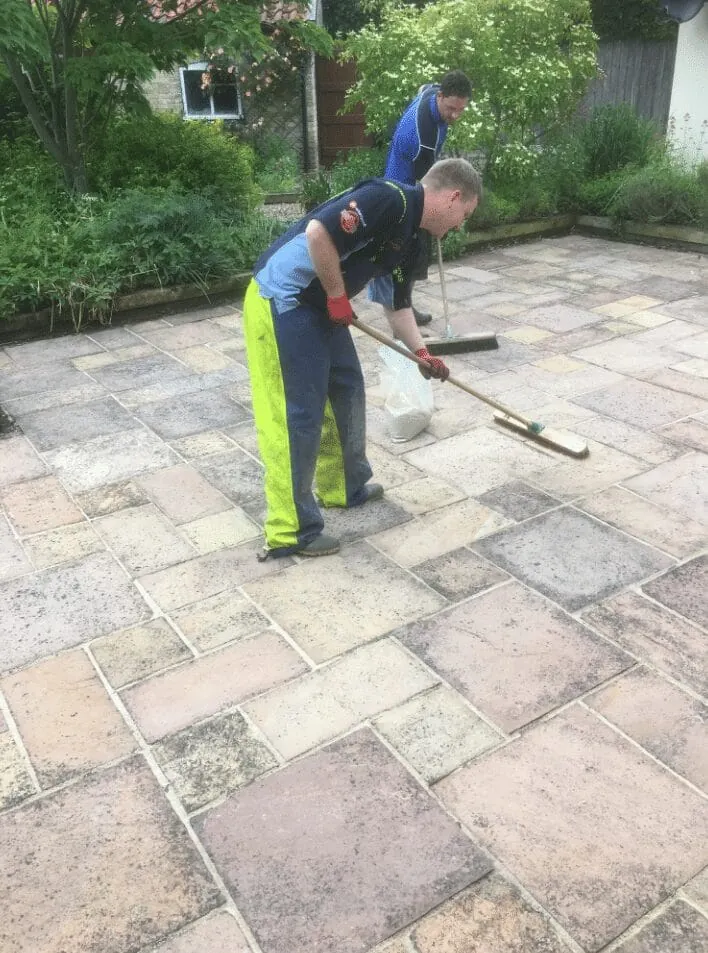
If you’re wondering how to get rid of black spots on patio surfaces effectively, you’re certainly not alone. Many homeowners spend hours with a pressure washer, only to discover that those stubborn marks refuse to disappear. It’s one of the most common reasons people start looking into patio cleaning services, only to discover the real problem isn’t ordinary dirt at all.
In my years working with natural stone and outdoor surfaces, I’ve lost count of the number of customers who’ve proudly told me they spent an entire weekend cleaning their patio, only to call a few weeks later because the black spots on your patio were still there. More often than not, the culprit isn’t dirt at all. It’s a resilient type of black lichen that has taken root deep inside the tiny pores of the stone.
The good news is that you can often remove black spots from your patio successfully with the right approach. The key is understanding what you’re dealing with and choosing the correct patio cleaner rather than relying on brute force alone.
Short Answer
The most effective way to get rid of black spots on a patio is to identify the cause first. Most patio black spot problems are caused by lichen, which grows below the surface of porous paving. A specialist black spot remover or dedicated patio cleaner, combined with proper dwell time, gentle scrubbing and thorough rinsing, usually produces far better results than pressure washing alone.
Key Takeaways
- Most black spot problems are caused by deeply rooted lichen rather than dirt.
- A pressure washer alone rarely removes established black lichen.
- Different patio materials require different cleaning methods.
- Avoid using strong bleach or neat bleach on delicate stone surfaces.
- Regular maintenance helps stop black spots from returning.
- Damp, shaded gardens encourage moss and algae, mould and lichen growth.
- Professional cleaning is often the safest choice for expensive natural stone patios.
What Are the Black Spots on a Patio?
One of the biggest misconceptions I hear is, “It’s only dirt.”
Unfortunately, it usually isn’t.
Those tiny, unsightly dots scattered across your paving slabs are commonly a type of lichen, although algae, mildew, mould and organic stain build-up can sometimes look similar.
Lichen is unusual because it’s a partnership between a fungus and microscopic algae. Together, they form an incredibly resilient organism that gradually penetrates the surface of many patio materials. Unlike surface dirt, lichen doesn’t simply sit on top of the stone. It grows into it.
That explains why these stubborn black spots are often difficult to remove.
Here’s a quick comparison.
|
Appearance |
Likely Cause |
Difficulty |
|
Small black dots |
Black lichen |
High |
|
Green film |
Alga growth |
Low |
|
Fuzzy black patches |
Mould and mildew |
Moderate |
|
Brown or dark marks |
Organic stain |
Moderate |
I’ve seen this many times over the years. One customer had an old patio made from Indian sandstone. They’d pressure washed it every spring for nearly five years. The surface looked clean from a distance, but thousands of tiny black dots remained.
Once we explained the biology behind the problem, it all made sense. Instead of using more pressure, we treated the lichen with a dedicated patio black spot remover, allowed the solution to work properly, and only then carried out gentle cleaning. The results were dramatically better.
Why Do Black Spots Keep Coming Back?
One of the most frustrating things about patio maintenance is seeing black spots reappear.
The reason is simple.
Lichen spreads using microscopic spore particles carried by the wind. If conditions remain damp, shaded and rich in organic matter, new colonies quickly begin to develop.
Several factors cause black spots to return:
- Constant shade
- Trees dropping leaves
- Poor drainage
- Damp weather conditions
- Moisture trapped between paving joints
- Organic debris and grime
An outdoor patio that receives little sunlight creates the perfect environment for lichen and algae to thrive.
Left untreated, the growth gradually spreads across stone paving, paths and driveways, eventually becoming much harder to remove.
Before You Start: Identify Your Patio Material
Not every patio should be cleaned the same way.
Different materials respond differently to chemicals and cleaning equipment.
For example:
- Sandstone is relatively soft and highly porous.
- Natural stone requires careful product selection.
- Concrete paving is generally more robust.
- Porcelain is much less porous and often easier to clean.
Using the wrong cleaning products can sometimes do more harm than the black spots themselves.
One principle I’ve always believed in is protecting the customer’s investment. Spending a little more time identifying the material before cleaning can save hundreds of pounds in unnecessary repairs later.
How to Remove Black Spots from Patios: A Step-by-Step Guide
1. Sweep the Area
Start by removing loose dirt, leaves and debris.
This helps the patio cleaner concentrate reach the surface properly.
2. Apply a Dedicated Patio Cleaner
Choose a dedicated patio cleaner specifically designed for black spot removal.
Many quality products are biodegradable and safe for use on most patio surfaces when used according to the manufacturer’s instructions.
Avoid assuming household cleaners will work just as well.
3. Allow the Solution to Work
Patience is important.
Always allow the solution to remain on the surface for the recommended time.
This gives the cleaner an opportunity to break down the lichen rather than simply washing over it.
4. Use a Brush
After the dwell time, use a brush with stiff but non-metal bristles.
A gentle scrub helps loosen dead growth without damaging the stone.
Avoid wire brushes on decorative paving.
5. Rinse the Area
Finally, rinse the area thoroughly with clean water.
A garden hose is often sufficient.
If you decide to use a pressure washer, keep the pressure moderate. Excessive pressure washing can erode joints and damage softer stone slabs.
Is Bleach a Good Black Spot Remover?
Many homeowners ask whether bleach is the answer.
The honest answer is: sometimes, but with caution.
Some patio cleaners contain sodium hypochlorite, also known as sodium hypochlorite, which is the active ingredient found in many bleach-based products.
Used correctly and diluted according to instructions, it can be effective.
However, using strong bleach or neat bleach carries risks.
It may damage nearby planting, discolour certain paving materials and can be harmful to plants if not carefully controlled.
That’s why I generally recommend using specialist patio products formulated specifically for outdoor stonework, rather than improvising with household chemicals.
Can White Vinegar Remove Black Spots?
You’ll often see white vinegar or distilled white vinegar recommended online.
While vinegar may help with light algae or fresh organic deposits, it rarely removes black lichen that has become deeply established.
Think of it as cleaning the symptom rather than the cause.
If your goal is to remove black spots from patios that have been developing for years, you’ll usually achieve better results when you use patio cleaners designed specifically for lichen.
Products such as Patio Magic or similar specialist treatments, along with long-lasting options like Wet & Forget, are often more effective because they continue working after application.
How to Prevent Black Spots from Returning
Once you’ve cleaned your patio, keeping it that way is much easier than starting again.
Simple habits make a big difference.
- Sweep regularly.
- Remove fallen leaves.
- Improve drainage where possible.
- Trim overhanging branches.
- Treat early signs of moss, algae and lichen before they spread.
- Consider an annual application of a suitable algae remover or maintenance treatment.
Regular patio cleaning prevents small colonies from becoming large infestations.
Final Thoughts
Black spots can make even the most beautiful patio look neglected, but they don’t have to be permanent. Understanding whether you’re dealing with black lichen, mould, algae, or another type of growth is the first step towards choosing the right solution.
Throughout my career, I’ve learned that successful cleaning isn’t about using the strongest product or the highest pressure. It’s about using the right method without damaging the surface you’re trying to protect. Sometimes that means accepting that one treatment isn’t enough, especially on older stone surfaces where lichen has had years to establish itself.
If you’re unsure which approach is right for your patio or you’d rather leave the hard work to experienced professionals, the team at Art of Clean has years of hands-on experience restoring outdoor stone and paving. Our focus has always been on honest advice, careful workmanship and helping homeowners protect their investment for years to come.
Article Sources
- British Lichen Society – Information on lichen biology and growth: https://britishlichensociety.org.uk
- Royal Horticultural Society (RHS) – Guidance on algae, moss and outdoor cleaning: https://www.rhs.org.uk
- Health and Safety Executive (HSE) – Safe use of cleaning chemicals: https://www.hse.gov.uk
- Manufacturer guidance from specialist patio cleaner suppliers, including Patio Magic and Wet & Forget, for product application and safety instructions.