
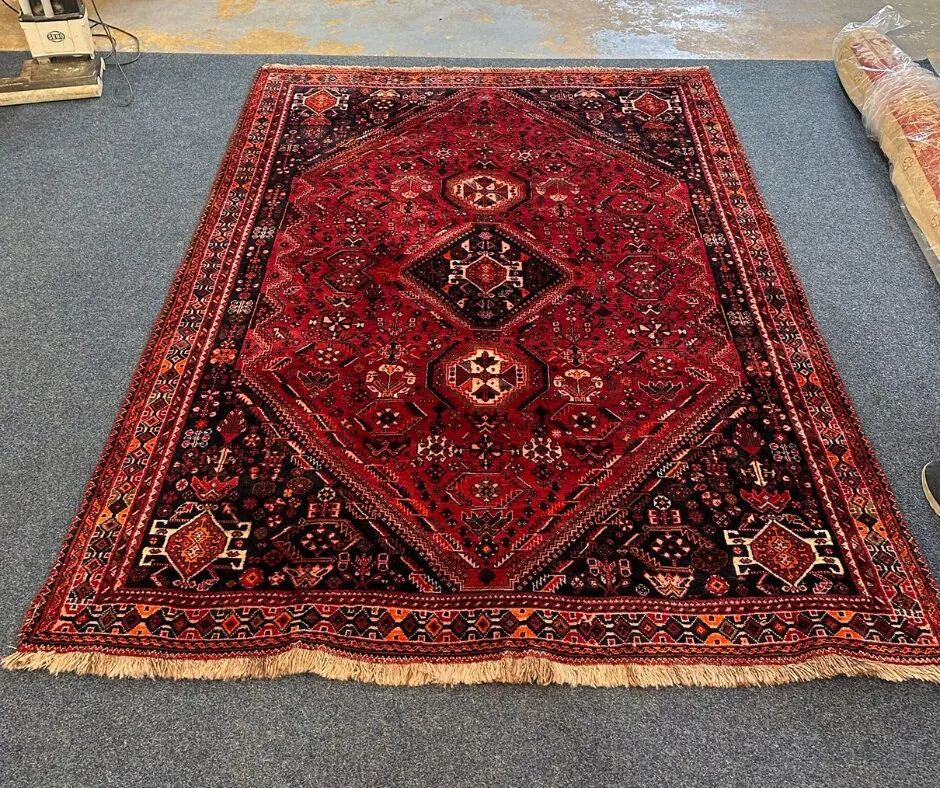
An Oriental rug is not just a loose carpet. It may have wool, silk, cotton foundations, vegetable dyes, fringes, old repairs and areas of wear that are not obvious until cleaning starts. This is why the right cleaning method should come from the rug itself, not from a general online tip.
For many homeowners, the best first step is simple: do less, not more. Remove dry soil gently, blot spills quickly, avoid harsh products and ask for advice before adding water, vinegar, bleach, carpet shampoo or steam.
If you need help with a rug that matters to you, Art of Clean offers professional rug cleaning in Cambridge with inspection, controlled cleaning and drying where suitable.
What is an Oriental rug?
An Oriental rug is usually a rug made using traditional designs, weaving methods and materials from rug-making regions such as Persia, Turkey, India, China, Afghanistan and nearby areas. Many are hand-knotted, although the term is also used broadly for rugs with Oriental-style patterns.
A hand-knotted Oriental rug is built knot by knot onto a foundation. That construction is part of what makes the rug beautiful, but it also means dirt can sit deep inside the pile and foundation. The face of the rug may look only slightly dull while dry soil and grit are sitting much deeper down.
This is one of the biggest things people miss when they try to clean a rug at home. A proper rug clean should not start with washing. It should start with dry soil removal. If a rug is washed before enough dry soil is removed, that hidden grit can turn muddy inside the rug and make cleaning less effective.
